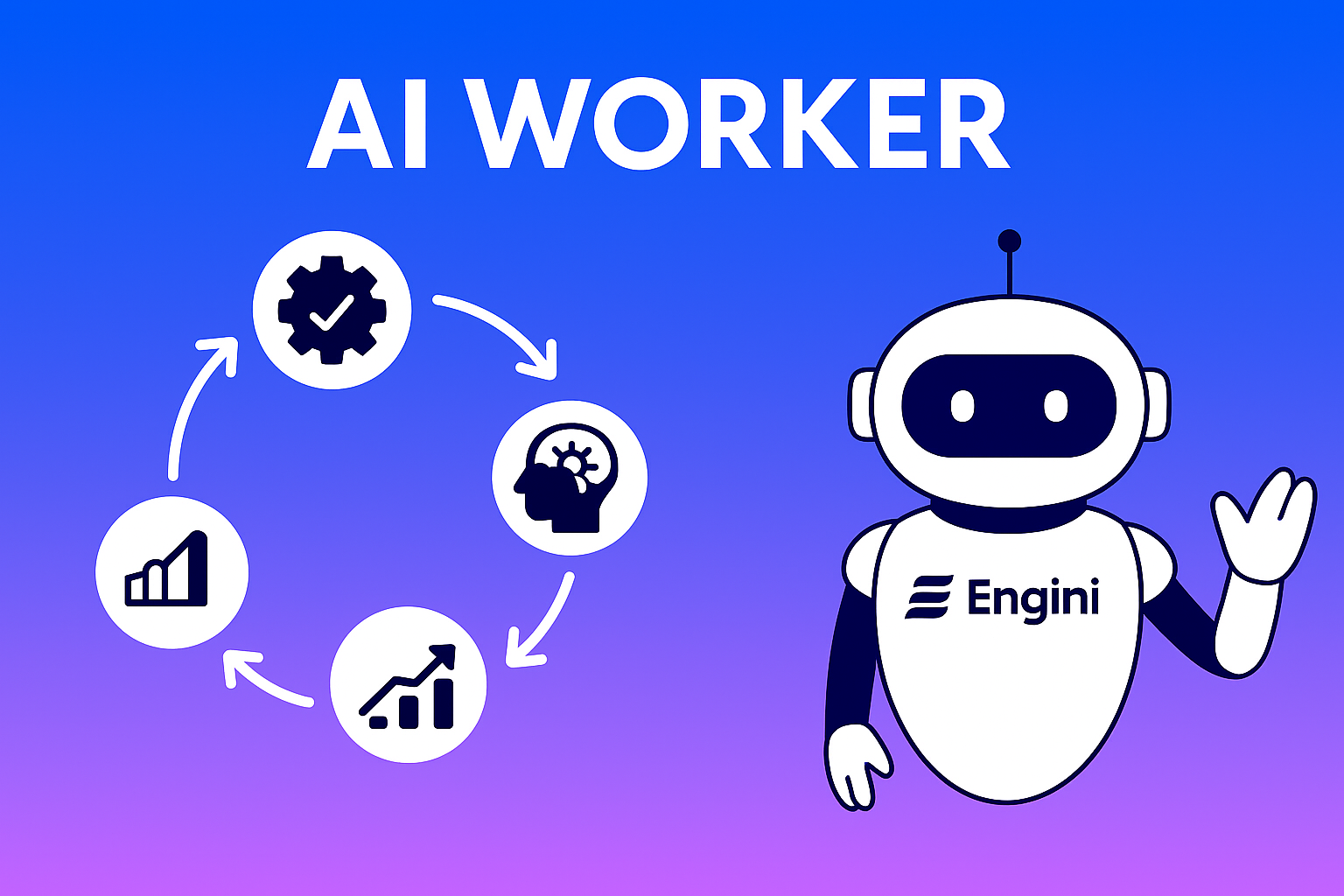
The Rise of the AI Worker: What It Means and Why It Matters in 2025
In 2025, the concept of an “AI Worker” is no longer theoretical-it’s a reality reshaping the modern workplace. Unlike simple bots or virtual assistants, AI Workers are autonomous digital agents capable of performing end-to-end tasks across enterprise systems. From handling repetitive workflows to making real-time decisions, these intelligent software teammates are redefining how businesses scale operations, reduce costs, and increase efficiency.
What is an AI Worker?
An AI Worker is an autonomous software agent capable of executing complex digital tasks within an enterprise environment. Unlike traditional bots or AI assistants that require human approval, AI Workers can reason, make decisions, and act across systems without direct oversight. Think of them as “digital teammates” rather than tools. This distinction signals a fundamental shift in how organizations approach automation.
Why the Shift Toward AI Workers?
Businesses today face an urgent need for scalable and intelligent systems. AI Workers are emerging as a solution due to their ability to perform tasks that once required multiple human interventions. They don’t just assist-they act.
The major drivers behind this shift include:
- – A demand for 24/7 workforce augmentation.
- – Rising complexity in workflows that require autonomous reasoning.
- – Pressure to reduce overhead and increase output.
- – The need for digital teammates that work across systems.
Defining Features of AI Workers
AI Workers combine the logic of traditional enterprise tools with the dynamic adaptability of generative AI. What sets them apart is their autonomy and contextual intelligence. They don’t need constant hand-holding.
They are:
- – Autonomous: Capable of choosing paths to meet goals.
- – Integrated: Functioning within CRMs, ERPs, and ATSs.
- – Context-Aware: Retain memory of past actions.
- – Secure: Enterprise-grade security and audit logs.
- – Real-Time: Always on, always ready to execute.
How AI Workers Differ from Other Tools
AI Workers mark a leap from traditional automation tools. While AI assistants and RPA bots offer helpful support, they are not truly autonomous. AI Workers are.
| Feature | AI Agent | RPA Bot | AI Worker |
| Decision-Making | No | No | Yes |
| Contextual Awareness | Low | None | High |
| Cross-System Workflows | Limited | Rigid | Flexible |
| Autonomy | Low | Scripted | High |
| Human Oversight | Required | Required | Optional |
Use Cases in the Modern Workplace
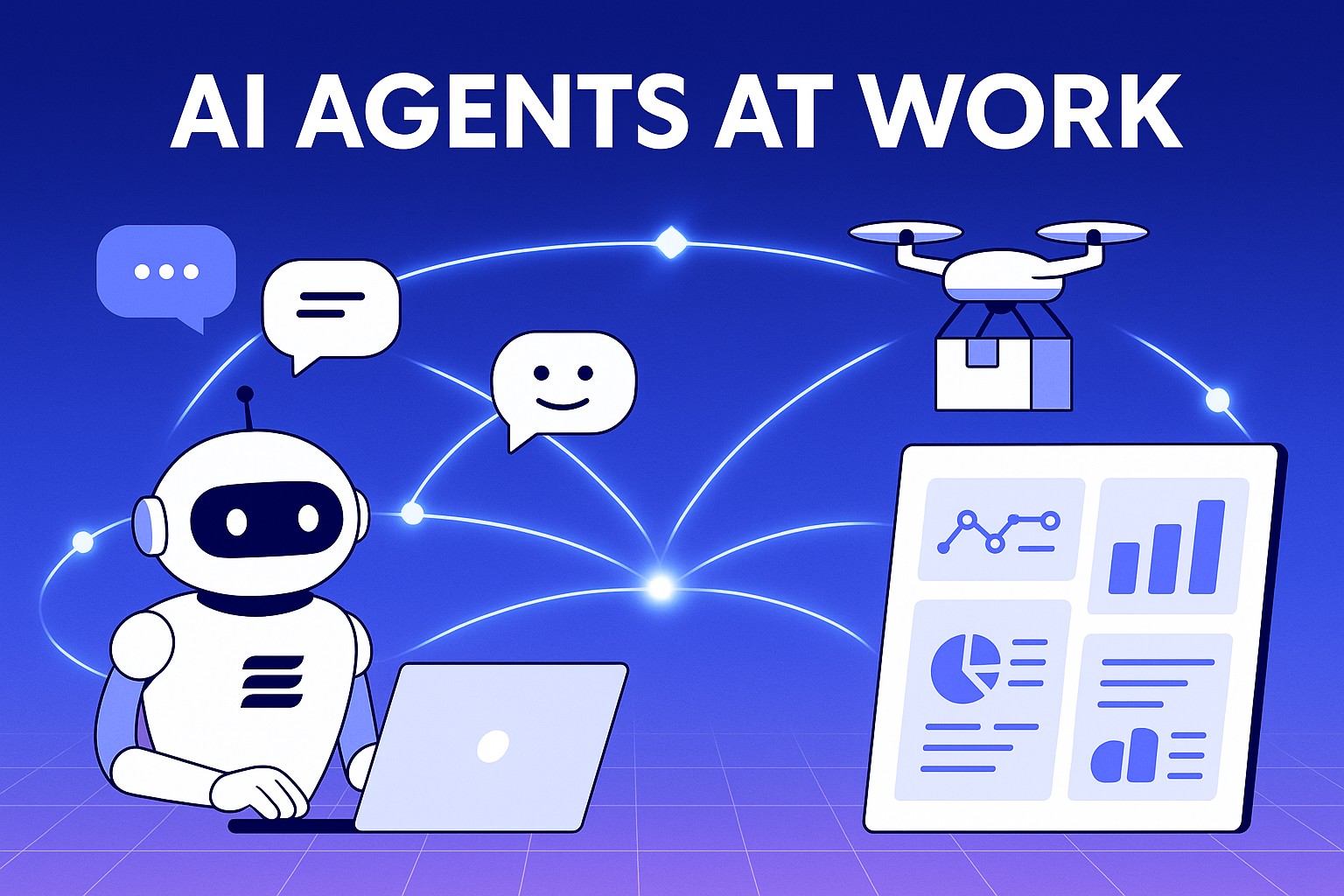
AI Workers are now being deployed across a range of business functions, offering tangible benefits in terms of speed, accuracy, and scalability. In HR, for example, they can screen resumes, assess candidate fit, and automatically schedule interviews, reducing the manual burden on recruiters.
In Sales departments, AI Workers help manage leads by scoring them based on behavior or intent, and they can follow up via personalized emails or internal messages through platforms like Slack. Finance teams are leveraging AI Workers to reconcile spreadsheets, flag inconsistencies in data, and generate compliance-ready reports with minimal human input. Meanwhile, Ops teams rely on them to update project trackers, coordinate task ownership, and identify bottlenecks in workflows.
As their adoption spreads, these AI-powered agents are proving their value in enhancing productivity and enabling staff to focus on higher-level strategic tasks.
Technologies That Power AI Workers
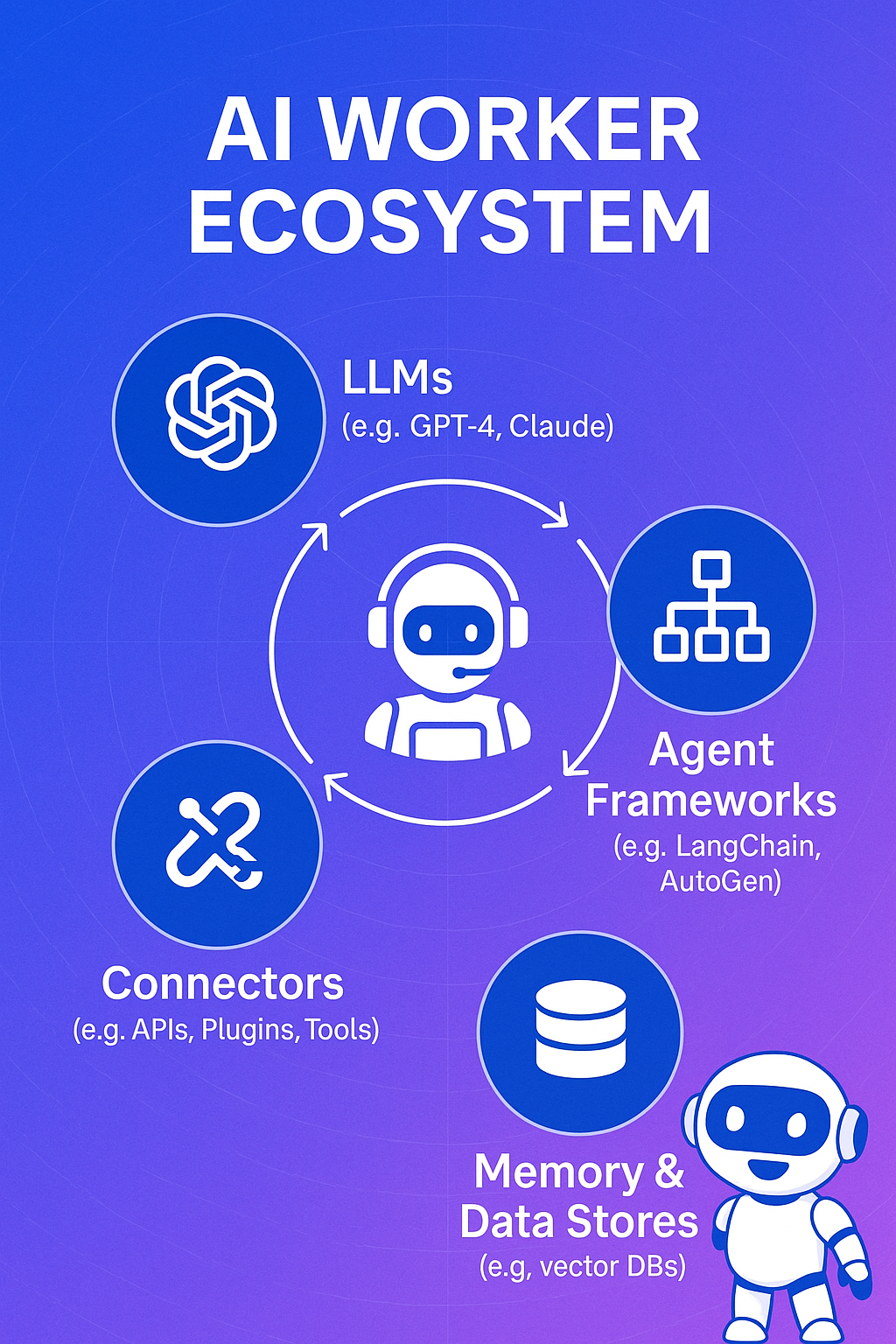
The intelligence and execution capability of AI Workers are powered by a suite of advanced tools. These include:
- – Large Language Models (LLMs) for reasoning and adaptability.
- – Agent Frameworks like LangGraph or AutoGen to structure workflows.
- – Connectors via platforms like Engini and Make.com for integrations.
- – Security Protocols including SOC2 and GDPR compliance standards.
These systems collectively create agents that are intelligent, secure, and adaptable to enterprise demands.
The Future of Work with AI Workers
The future of work is not just about replacing manual labor with machines it’s about enabling meaningful collaboration between human professionals and intelligent digital agents. As AI Workers continue to evolve, businesses are shifting from basic automation to a model where AI is deeply embedded in workflows, actively partnering with teams to enhance productivity.
One major shift is the rise of seamless hybrid teams, where AI Workers operate alongside humans to manage day-to-day tasks and free up time for strategic thinking. This is complemented by the development of intuitive, no-code interfaces that empower non-technical users such as managers or operations leads to configure and deploy AI workflows without engineering support.
Equally important is the growing emphasis on transparency and explain ability. As AI decisions influence more aspects of business, enterprises are adopting frameworks that ensure actions taken by AI Workers are understandable, auditable, and aligned with organizational values. Looking ahead, we’ll also see the emergence of general purpose AI Workers capable of flexibly switching between roles in HR, finance, customer service, and beyond.
Final Thoughts
AI Workers mark a new era in enterprise productivity one where automation is no longer about replacing humans, but empowering them. By offloading repetitive tasks, AI Workers enable teams to focus on strategic initiatives, creative problem-solving, and high-impact decision making.
As organizations navigate tighter budgets and rising expectations, the integration of AI Workers isn’t just a competitive advantage it’s quickly becoming a business imperative.
With Engini’s AI Workers, businesses can immediately deploy intelligent digital agents that automate complex tasks, integrate across systems, and scale with enterprise demands. As adoption accelerates, early movers leveraging AI Workers for productivity and cost-efficiency will gain a significant competitive edge.
FAQ
Answers to common questions about AI Workers and how they operate in modern organizations.
What are AI Workers?
AI Workers are autonomous digital agents designed to perform tasks without human intervention. Unlike simple bots, they can make decisions, take actions, and integrate across platforms to streamline workflows.
Will AI Workers replace human jobs?
No, AI Workers are built to enhance human productivity not replace it. They take over repetitive and manual tasks, allowing teams to focus on strategic, creative, and high-value work.
How are AI Workers different from AI assistants or copilots?
AI Workers operate independently and execute tasks without needing real-time human approval. In contrast, AI assistants and copilots typically require human input or supervision to act.
Which industries are adopting AI Workers the fastest?
Industries like Human Resources (HR), Sales, Finance, and Customer Support are rapidly adopting AI Workers due to their high volume of repetitive, time-consuming tasks.
Can AI Workers integrate with existing business tools?
Yes. AI Workers are designed to work across popular business platforms such as CRMs, ERPs, and HR systems, ensuring seamless automation without requiring custom software development.
Like what you see? Share with a friend.
Itay Guttman
Co-founder & CEO at Engini.io
With 11 years in SaaS, I've built MillionVerifier and SAAS First. Passionate about SaaS, data, and AI. Let's connect if you share the same drive for success!
Share with your community


.png)
Comments