
Business Process Automation (BPA) in 2025: Strategies, Tools, and Real ROI
As businesses enter 2025, agility, efficiency, and digital precision are no longer luxuries-they’re mandates. Business Process Automation (BPA) stands at the core of this evolution, transforming repetitive, manual workflows into streamlined, intelligent operations.
This comprehensive guide, developed by automation experts and backed by real implementation experience, covers the essentials of BPA: its strategic value, practical tools, implementation roadmap, future trends, and success stories. Whether you’re leading a digital transformation or exploring automation for the first time, this is your expert-endorsed roadmap to BPA success.
What Is Business Process Automation?
Business Process Automation (BPA) is a strategic discipline that involves leveraging software tools and digital platforms to automate repetitive, rule-based tasks that span across multiple departments. It is particularly effective for processes that require standardization, frequent data handling, and decision-making based on fixed business logic. BPA differs from Robotic Process Automation (RPA) in that it focuses not merely on mimicking user interactions with a system, but on orchestrating end-to-end workflows across disparate platforms.
A BPA solution might automate a complete quote-to-cash cycle, involving CRM updates, invoice generation, email notifications, and compliance logging-all without human intervention. This distinguishes BPA as a foundational technology for digital transformation and enterprise scalability.
Why BPA Is Essential in 2025
In 2025, modern organizations face unprecedented pressure to achieve faster, leaner, and more secure operations. Business Process Automation (BPA) stands as a critical enabler for this strategic transformation, offering five key advantages that drive efficiency and growth in the digital age:
Cost Efficiency: BPA significantly mitigates operational expenditures and minimizes costly errors by drastically reducing reliance on manual labor. This leads to substantial cost savings and improved financial performance, making it a cornerstone of operational excellence.
Speed: Processes that historically required hours or even days can now be completed in mere seconds. This unparalleled acceleration facilitates rapid decision-making, streamlines service delivery, and dramatically improves overall business agility.
Compliance: Through automated logging, robust policy enforcement, and real-time reporting, BPA systems are instrumental in assisting businesses in maintaining strict adherence to industry regulations and internal governance. This ensures regulatory compliance and minimizes legal risks.
Scalability: BPA systems are inherently designed to manage increased workloads and evolving demands without a proportional increase in personnel or overhead. This remarkable scalability empowers organizations to grow and adapt efficiently, handling peak periods with ease.
Customer and Employee Experience: Consistent, automated processes enhance satisfaction for both customers and employees. By reducing friction in both internal and external engagements, BPA significantly improves the customer journey and fosters a more positive and productive employee experience.
Business Process Automation (BPA) is crucial for modern business strategy. Gartner and IDC recognize its role in digital maturity and innovation. Organizations adopting BPA gain resilience, innovation, and competitive advantage. Embrace automation to unlock your organization’s potential.
Key Benefits of BPA (With Use Cases)
Beyond general efficiency gains, BPA provides strategic advantages across multiple business units:
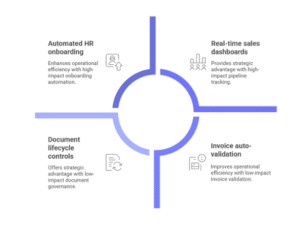
Business Process Automation (BPA) vs. Robotic Process Automation (RPA) vs. Intelligent Process Automation (IPA) vs. Hyperautomation
Comprehending the positioning of Business Process Automation within the broader spectrum of automation methodologies is crucial for informed tool selection.
| Automation Type | Description | Primary Applications |
|---|---|---|
| BPA | Integrates workflows across disparate systems | Human Resources, Finance, IT processes |
| RPA | Replicates user interface-based human actions | Data entry within legacy system |
| IPA | Incorporates AI for judicious decision-making | Sentiment analysis, fraud detection |
| Hyperautomation | Orchestrates BPA, RPA, AI, and analytics | Comprehensive end-to-end enterprise automation |
Key Use Cases by Department
Automation extends beyond the IT department, facilitating cross-departmental transformation.
| Department | Common Use Cases |
|---|---|
| HR | Onboarding, leave approvals |
| Finance | Invoice processing, reimbursement flows |
| Sales/Marketing | CRM updates, lead scoring and routing |
| IT | Account provisioning, password resets |
| Customer Support | Ticket routing, SLA tracking |
| Supply Chain | PO creation, logistics tracking |
When to Automate a Process
Knowing what to automate is just as critical as how to automate it. Start with repetitive, error-prone processes that involve frequent delays or multiple handoffs to quickly maximize impact and ROI.
Ideal processes include:
- – High-volume repetition
- – Cross-departmental handoffs
- – Regulatory or compliance requirements
- – Manual work that delays core business functions
Pro Tip: Begin by auditing 3–5 processes to identify the “low-hanging fruit” that can be automated for quick wins.
Step-by-Step BPA Implementation Guide
Successfully implementing BPA involves more than installing a tool. It requires strategy, planning, and iteration:
1. Identify Opportunities Analyze: current workflows for friction, redundancy, and volume. Use employee feedback and performance metrics to surface high-potential automation candidates.
2. Map Existing Workflows Visualize: current processes using tools like Lucidchart or Miro. This helps stakeholders see pain points and establishes a baseline for redesign.
3. Define KPIs: Establish metrics that track the performance of your BPA strategy, such as average task duration, error frequency, and process throughput.
4. Select the Right Tools: Compare BPA platforms like Engini, Zapier, and Make. Evaluate their ease of use, integration capabilities, scalability, and reporting features.
5. Pilot a Process: Choose a single workflow with clear ROI. Document the before-and-after metrics to demonstrate impact.
6. Train Stakeholders: Educate users on both the new workflow and the tool. Incorporate feedback loops to adapt quickly.
7. Track & Optimize: Review dashboard analytics and survey feedback to continuously improve workflows and scale automation across teams.
8. Institutionalize Learnings: Document the process changes, assign automation owners, and create SOPs to ensure the BPA initiative is sustainable and transferable.
9. Integrate with Strategic: Goals Align BPA initiatives with broader business objectives such as digital transformation, ESG compliance, or customer experience strategies.
Real-World BPA Success Stories Across Departments
HR Department: A mid-sized tech company dramatically cut onboarding time from five to two days using Business Process Automation (BPA). This was achieved by automating employee record creation, system access, and task assignments, thereby streamlining the entire process.
Finance Department: A global enterprise implemented AI-enhanced BPA to validate thousands of invoices monthly, resulting in a 98% improvement in accuracy and a 40% reduction in payment cycles.
Sales Department: An eCommerce firm saw a 27% increase in lead conversion after introducing intelligent lead scoring, auto-routing, and personalized follow-up sequences.
IT Operations: A large SaaS provider utilized BPA to automate account provisioning and deactivation for new hires and terminations. This led to a 60% reduction in manual IT workload and enhanced security posture by eliminating delays.
Customer Service: A telecommunications company leveraged BPA to automatically escalate service tickets based on sentiment analysis from chatbot interactions, significantly reducing resolution time by 35% and increasing customer retention.
Procurement & Supply Chain: A manufacturing firm automated its purchase order approvals and shipment tracking, which reduced administrative delays by 50% and improved vendor relationships through consistent communication and delivery expectations.
Emerging Trends in Business Process Automation (BPA) for 2025
As digital transformation accelerates, the capabilities of BPA are rapidly evolving:
AI-Powered Predictions: AI will preemptively suggest workflow changes to prevent bottlenecks and improve outcomes.
Hyperautomation: Enterprises will increasingly unify RPA, BPA, and AI under single orchestration platforms.
No-Code/Low-Code Platforms: These tools democratize automation by allowing business users to create workflows without writing code.
Automation-as-a-Service: BPA will be offered in scalable, subscription-based models, making enterprise-grade automation accessible to SMBs.
Composable Automation: Organizations will adopt modular BPA frameworks that can be quickly assembled and reassembled to address dynamic business needs.
BPA for ESG Compliance: Expect BPA tools to play a role in automating sustainability reporting and environmental compliance workflows.
Workforce Augmentation: Automation will shift from replacement to augmentation, helping knowledge workers focus on creativity and complex decisions.
Measuring ROI from Business Process Automation
Calculating the return on investment (ROI) of BPA helps justify its value to stakeholders and guides future scaling. ROI can be measured in both quantitative and qualitative terms-time saved, error reduction, increased throughput, and cost savings all contribute directly to performance metrics.
Key Metrics to Measure BPA ROI:
- Time Saved: Compare the average completion time of a process before and after automation.
- Cost Savings: Track reductions in labor, rework, and compliance costs.
- Error Reduction: Count data entry or transactional errors avoided through automation.
- Throughput Increase: Measure how many more processes can be completed with the same resources.
- Customer/Employee Satisfaction: Assess improvements through survey scores or retention rates.
Simple ROI Formula:
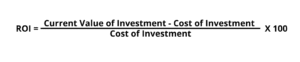
For example, if automating an invoicing process costs $15,000 but saves $50,000 in processing and labor annually, the ROI is 233%.
Pro Tip: Start by calculating ROI for your pilot process to build internal credibility and inform expansion.
FAQs About Business Process Automation
How is BPA different from RPA?
BPA integrates and automates cross-platform workflows; RPA simulates user actions in specific interfaces.
Can small businesses benefit from BPA?
Yes. Platforms like Zapier and Engini offer cost-effective BPA solutions that don’t require technical teams.
What kinds of processes are ideal for automation?
Processes that are rules-based, repetitive, involve multiple steps or approvals, and have measurable bottlenecks.
How long does BPA implementation take?
It varies based on scope and complexity. Simple workflows may take days, while enterprise-wide implementations can span months.
What are common challenges in BPA adoption?
Resistance to change, unclear KPIs, and lack of cross-functional collaboration. These can be addressed with strong leadership and phased rollouts.
Conclusion
Business Process Automation is no longer optional in 2025-it’s essential for competitive growth. BPA enables smarter workflows, reduces costs, and improves service delivery. As AI, low-code tools, and integrated platforms become mainstream, every business has the opportunity to automate and scale without complexity.
To future-proof your operations, start small, scale strategically, and choose tools that grow with your business needs. Focus on measurable outcomes, maintain alignment with stakeholders, and ensure the entire organization understands BPA’s transformative value.
Like what you see? Share with a friend.
Itay Guttman
Co-founder & CEO at Engini.io
With 11 years in SaaS, I've built MillionVerifier and SAAS First. Passionate about SaaS, data, and AI. Let's connect if you share the same drive for success!
Share with your community




.png)
Comments