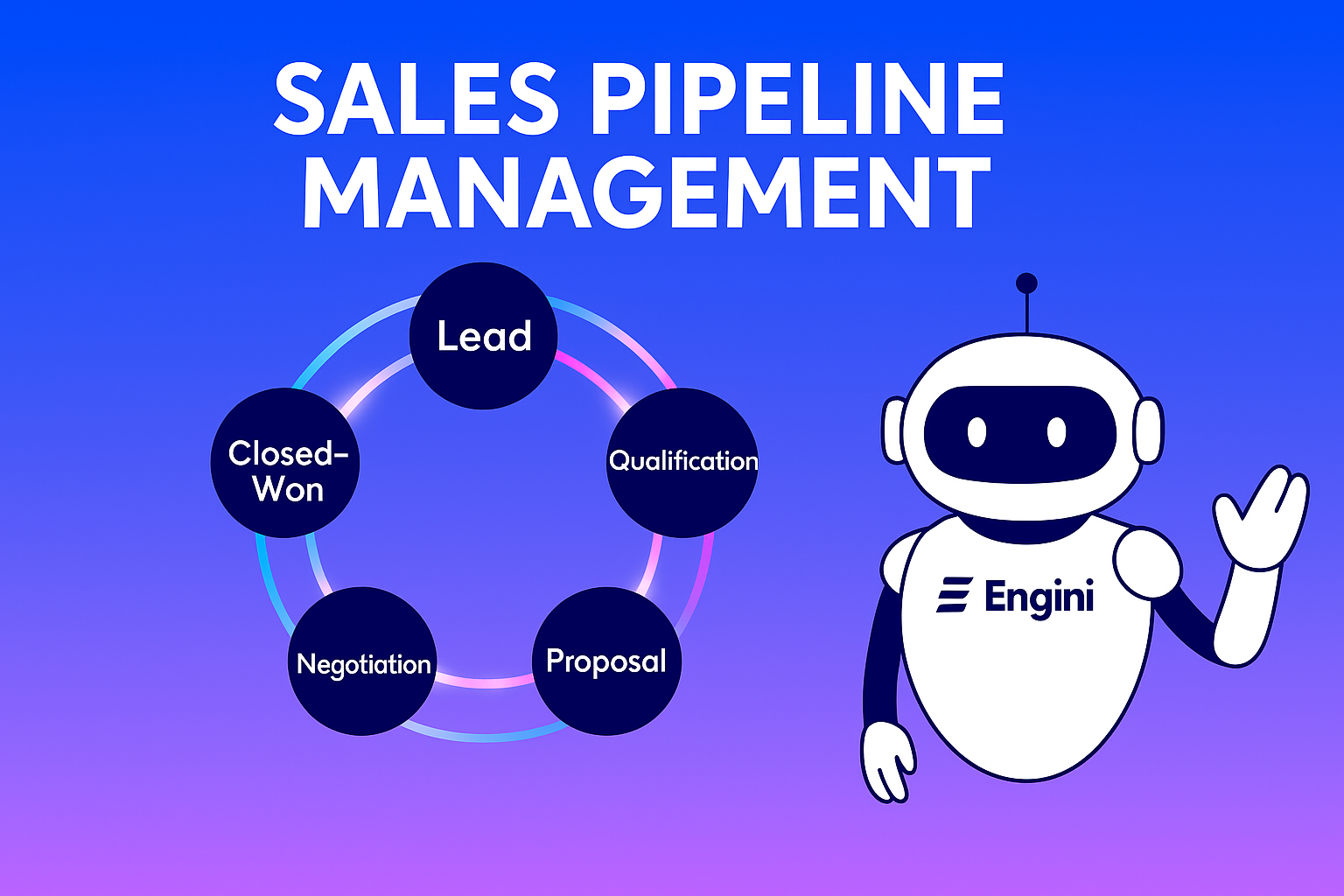
Mastering Sales Pipeline Management: How to Streamline Deals and Drive Predictable Growth
In today’s hyper-competitive sales landscape, efficiency and predictability are everything. With shrinking budgets and rising expectations, teams are under pressure to hit revenue goals faster and more accurately than ever before. That’s where sales pipeline management comes into play.
According to HubSpot, businesses that actively manage their sales pipelines achieve 28% higher revenue growth than those that don’t. Yet, many organizations still rely on inconsistent tracking, manual CRM updates, and unclear forecasting. This lack of visibility leads to stalled deals and missed opportunities.
This guide explores how strategic sales pipeline management empowers teams to forecast confidently, accelerate deal velocity, and sustain scalable growth. You’ll learn actionable steps, common pitfalls, and how tools like Engini’s AI Worker automate the entire process.
What Is a Sales Pipeline?
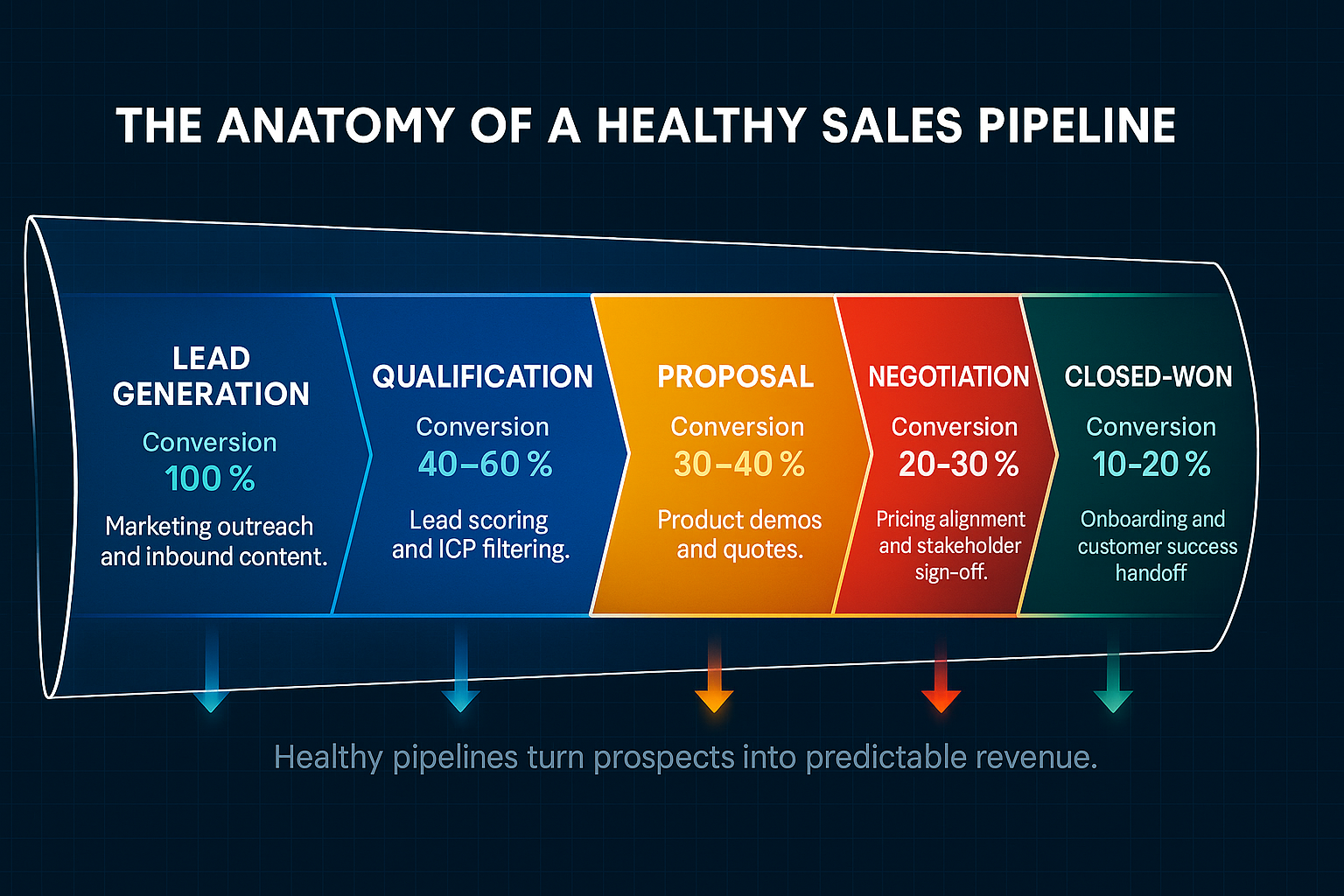
A sales pipeline is the visual and operational framework that shows where every potential deal stands from first contact to closed-won. It helps sales leaders track performance, forecast outcomes, and allocate resources effectively.
Typical sales pipeline stages include:
- – Lead generation
- – Qualification
- – Proposal
- – Negotiation
- – Closed-won / Closed-lost
Each stage represents a milestone in the customer journey. Managing them effectively ensures sales reps stay focused on high-potential deals while maintaining clarity on team-wide progress.
Why Sales Pipeline Management Matters
Pipeline management isn’t just about organization it’s about optimization. By structuring your pipeline properly, you can turn unpredictable sales into a repeatable, measurable process.
Key Benefits:
- – Improved Forecasting: Reliable data gives you a clear view of upcoming revenue.
- – Increased Efficiency: Sales reps spend more time selling, less time guessing.
- – Cross-Team Alignment: Marketing, sales, and RevOps all work from the same playbook.
- – Customer-Centric Insights: Every interaction is tracked and contextualized.
According to Gartner’s 2024 Sales Enablement Report, teams using structured pipeline frameworks see a 25% improvement in deal velocity and 33% better forecasting accuracy.
Common Challenges in Sales Pipeline Management
Even seasoned sales teams face hurdles when managing their pipelines. Understanding these challenges and how to fix them can dramatically increase pipeline performance.
1. Data Decay and Incomplete Records
Over time, CRM data becomes outdated or incomplete, leading to inaccurate forecasts. Regular audits and automation can mitigate this.
2. Deal Stagnation
Deals often get stuck between stages due to unclear next steps or misaligned expectations. Introducing automated reminders and stage-specific playbooks helps maintain momentum.
3. Poor Qualification Processes
Unqualified leads inflate your pipeline, giving a false sense of progress. Adopting strict qualification frameworks like BANT or MEDDIC ensures reps focus on high-fit prospects.
4. Overreliance on Manual Updates
Without automation, reps waste time on administrative work. Integrating CRM tools with communication platforms keeps data updated in real-time.
5. Lack of Visibility Across Teams
When marketing, sales, and leadership use different metrics, collaboration breaks down. Centralized dashboards solve this by offering a single source of truth.
Key Elements of Effective Sales Pipeline Management
To truly optimize performance, your pipeline needs structure, accountability, and adaptability.
Core principles include:
- – Defined Stages and Criteria: Ensure each stage has clear entry/exit rules.
- – Automation First: Use workflow tools to eliminate manual updates.
- – Pipeline Hygiene: Conduct regular deal reviews and remove inactive leads.
- – Meaningful KPIs: Track deal velocity, win rates, and forecast accuracy.
- – CRM Customization: Configure your system to mirror your actual process.
How to Build and Maintain a High-Performing Sales Pipeline
A high-performing pipeline is built on clarity, consistency, and technology. Below is a roadmap to help your team sustain peak efficiency.
1. Define Your Ideal Customer Profile (ICP)
Clarify who your best customers are. Document their pain points, goals, and triggers for purchasing decisions. This focus ensures your pipeline isn’t clogged with low-fit leads.
2. Align Marketing and Sales
Marketing should deliver sales-ready leads based on shared ICP data. Sales, in turn, should provide feedback loops on lead quality to refine targeting.
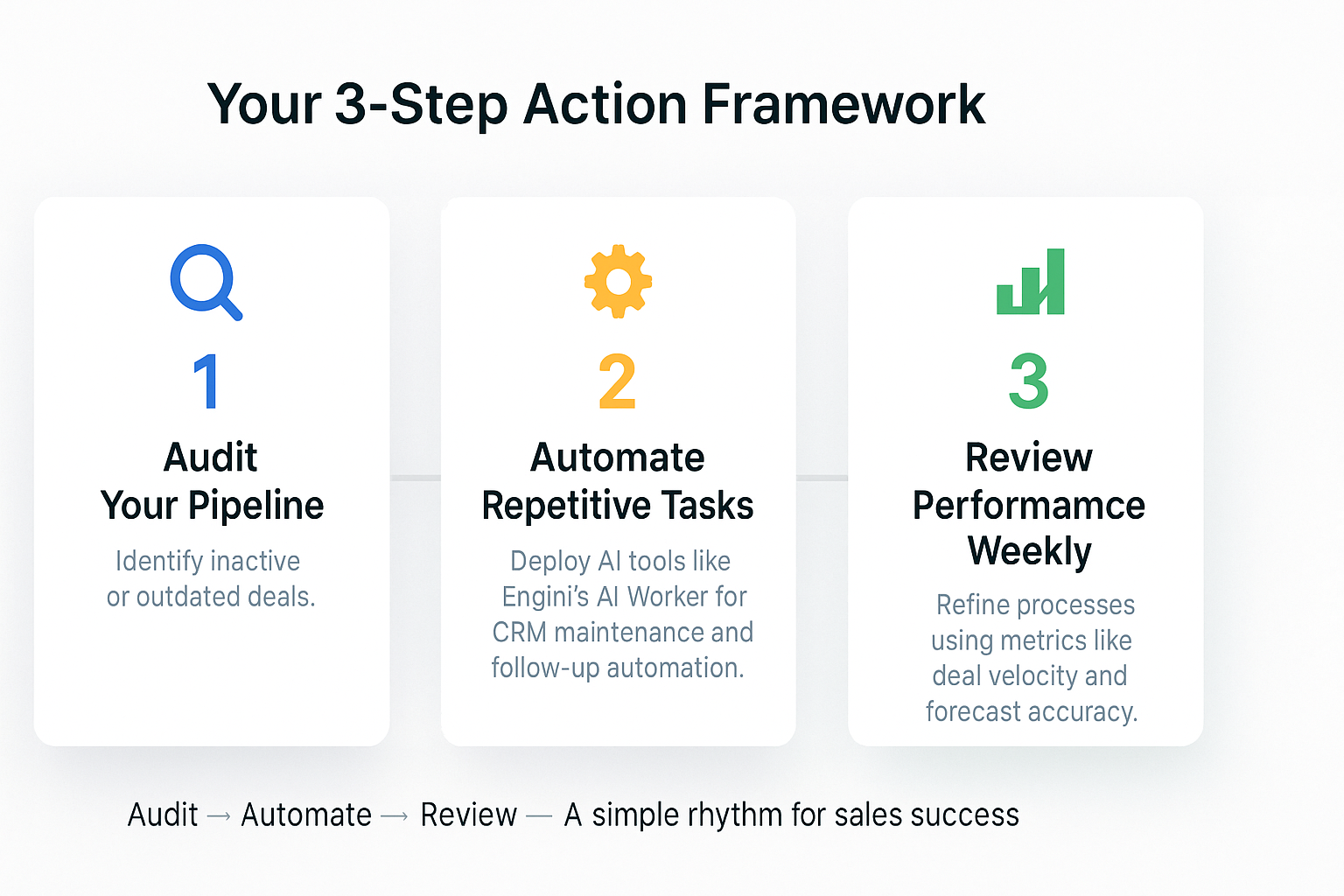
3. Automate Key Processes
Automate repetitive actions such as lead assignment, follow-ups, and pipeline updates. For instance, Engini’s AI Worker can trigger a follow-up email the moment a deal becomes idle for seven days.
4. Review and Optimize Continuously
Hold bi-weekly reviews to evaluate deal velocity, identify stage bottlenecks, and retrain reps based on performance metrics.
5. Leverage Predictive Insights
Integrate AI-driven analytics to predict which deals are most likely to close. These insights guide reps on where to focus their time.
Engini’s AI Worker: The Future of Sales Pipeline Automation
Modern sales teams are drowning in admin tasks logging calls, tracking follow-ups, updating CRM notes. Engini’s AI Worker automates these processes, turning your CRM into a self-maintaining growth engine.
Key Capabilities:
- – Automated Data Entry: Syncs meeting notes, emails, and activities automatically.
- – Deal Prioritization: Uses AI to flag deals most likely to close.
- – Personalized Follow-Ups: Triggers context-aware communications at the perfect time.
- – Forecast Accuracy: Continuously analyzes pipeline health to deliver precise revenue projections.
Real-world impact: Teams using Engini’s AI Worker report a 40% increase in active selling time, 30% boost in data accuracy, and 25% faster deal velocity.
The Role of Technology in Modern Pipeline Management
Automation and AI are reshaping how sales teams operate. McKinsey’s 2024 Digital Sales Study found that companies leveraging AI in pipeline management experience up to 15% higher conversion rates and 20% shorter sales cycles.
Technology allows teams to:
- – Eliminate manual errors
- – Enhance collaboration between departments
- – Predict outcomes with greater accuracy
- – Scale operations without adding complexity
Conclusion: Turning Insights into Action
Sales pipeline management is no longer a nice-to-have it’s the engine behind predictable revenue growth. With clear stages, automated data management, and AI-powered forecasting, teams can finally operate with speed and precision.
According to Harvard Business Review, organizations that apply data-backed pipeline discipline outperform their peers by 12–18% in annual revenue consistency.
Start today: streamline your process, empower your team with automation, and transform your sales pipeline into a predictable growth machine.
FAQ: Sales Pipeline Management
What is the main goal of sales pipeline management?
To help sales teams track and manage opportunities effectively, forecast revenue accurately, and identify bottlenecks in the sales process.
How often should I review my sales pipeline?
Ideally, weekly. Frequent reviews keep data accurate and help you catch stalled deals before they become lost opportunities.
What’s the difference between a sales funnel and a sales pipeline?
A sales funnel visualizes the buyer’s journey from awareness to purchase, while a sales pipeline represents the seller’s internal process for managing opportunities.
Can automation really improve pipeline management?
Absolutely. Tools like Engini’s AI Worker automate admin tasks, enhance follow-up consistency, and provide real-time deal insights.
How can I measure if my pipeline is healthy?
Look for steady deal flow, balanced conversion rates, and accurate revenue forecasts over multiple quarters.
Like what you see? Share with a friend.
Itay Guttman
Co-founder & CEO at Engini.io
With 11 years in SaaS, I've built MillionVerifier and SAAS First. Passionate about SaaS, data, and AI. Let's connect if you share the same drive for success!
Share with your community


.png)
Comments