Revenue Operations (RevOps): How to Align GTM, Clean Your Data, and Compound Growth
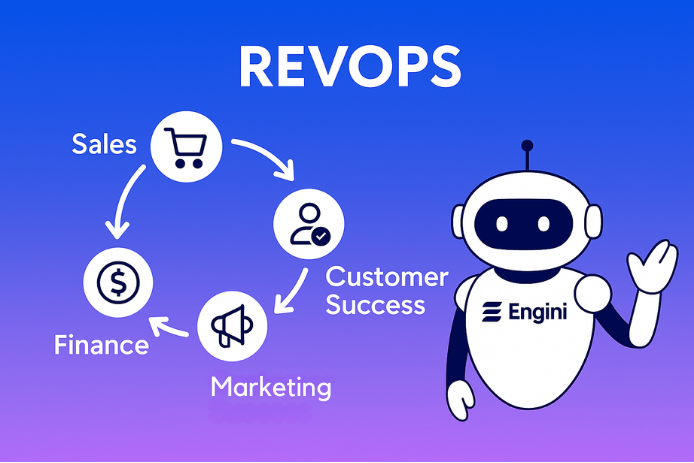
Revenue operations (RevOps) is the function that aligns sales, marketing, customer success, and finance around one customer lifecycle, shared data, and an operating rhythm to drive predictable revenue growth. RevOps standardizes processes, improves data quality, and connects the tech stack so teams forecast accurately and scale efficiently.
What Revenue Operations Actually Is
At its simplest, revenue operations is the discipline of integrating the go-to-market engine. It ties together the people, processes, data, and systems across Marketing, Sales, Customer Success, and Finance so that a prospect’s first touch, a salesperson’s follow-up, a customer’s onboarding, a renewal, and an expansion all sit on the same backbone. That backbone is not only technical-CRM, data warehouse, billing-it’s also linguistic. The moment your organization agrees on what an MQL, SQL, opportunity, renewal, and expansion mean, the data becomes far more valuable. RevOps owns that shared language and ensures it shows up consistently in fields, workflows, and reports.
The most common misconception is that RevOps is just “Sales Ops with a new name.” In practice, Sales Ops, Marketing Ops, and CS Ops are domain experts who build within their swim lanes. RevOps orchestrates those lanes so they flow in one direction. It prioritizes tradeoffs, governs data, and curates the performance narrative executives use to make decisions.
Why RevOps Matters Now
Two forces have made revenue operations urgent. First, buyers expect frictionless, self-service experiences even in enterprise deals. They move fluidly between content, product trials, and human conversations; they reject channels that feel disconnected. Second, leadership teams are seeking efficient growth: more pipeline and expansion from the same or smaller budgets. When teams optimize locally-Marketing for form fills, Sales for short-term bookings, CS for ticket closure-everyone appears busy while the system slows down.
RevOps attacks the root cause: misalignment. By building a single lifecycle, it replaces vanity stats with stage conversion, velocity, and retention. The benefit is not just tidy dashboards. Reps get cleaner territories and faster routing. Marketers understand what actually produces qualified pipeline. Customer Success sees context about the promises Sales made and can prioritize onboarding tasks that predict retention. Finance reconciles bookings with products, terms, and invoices. Predictability improves; waste declines.
The Operating Model: Lifecycle First, Tools Second
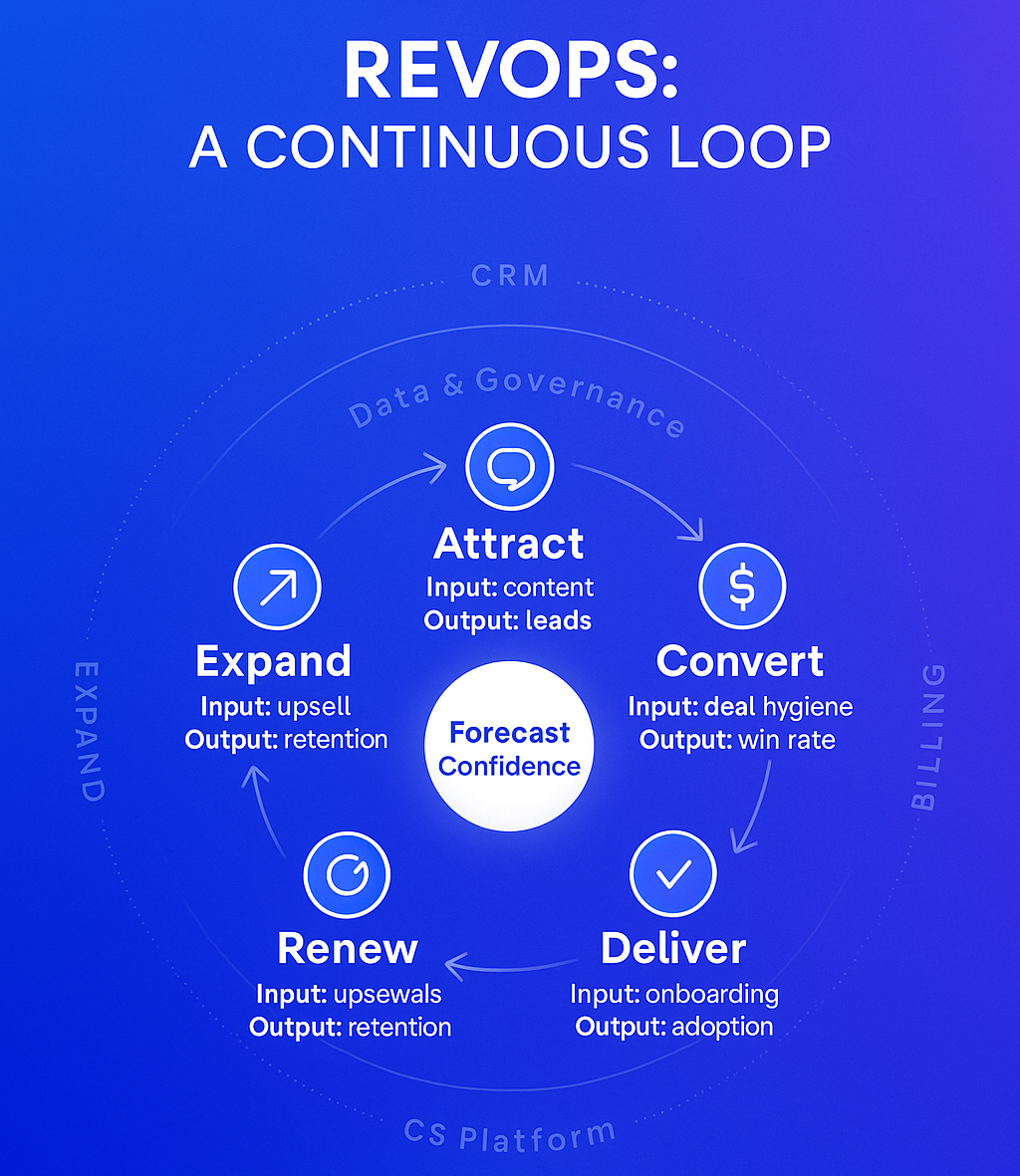
A healthy revenue operations function starts with a lifecycle map and only then chooses tools. The map defines the journey from first touch to advocacy, who owns each step, and the entry/exit criteria that gate progress. You don’t need a wall of swim lanes to do this well. Two or three clear diagrams-Lifecycle, Data Flow, and Governance-are enough to anchor the work. Under each stage, write the handful of fields that matter most, along with who updates them and when. This is the difference between a CRM full of optional fields and a living operating system: fewer inputs, better hygiene, and strong automation.
In mature teams, the operating model also includes a change-management path. Every tweak to a field, picklist, or automation has a business case, an owner, and a communication plan. RevOps runs an intake process, ranks requests by business impact, ships in small increments, and publishes release notes. Sales and CS feel like co-designers rather than recipients of surprise changes.
Data Governance: The Quiet Superpower
Data governance isn’t glamorous, but it compounds. Identity resolution-knowing that this person at this company is the same across CRM, marketing automation, product analytics, and billing-turns sporadic interactions into a reliable history. Standardized taxonomies for industries, sizes, roles, and segments reduce duplicate reports and arguments about filters. SLA stamps (MQL date, SAL date, SQL date, Closed-Won date, Activation date) give your funnel time series that analytics teams can trust.
Good governance is less about adding tools and more about making a few rules unbreakable. RevOps sets conventions for naming campaigns and UTMs, validates essential fields at the right moments, and locks down who can create new values. As the organization grows, these habits protect the signal in your data and keep attribution debates honest.
The RevOps Tech Stack
The “best stack” is the one your team can run well. Start with a CRM that reps actually use, a marketing automation platform that governs UTMs and nurturing, a customer success platform that tracks adoption and renewals, a data warehouse that holds the integrated truth, and a billing system that understands subscriptions and terms. Layer in enrichment, routing, reverse ETL, enablement, and attribution tools only when you have a clear purpose for each.
Use bullets sparingly to summarize the core, then return to narrative:
- – Core systems to stabilize early: CRM as system of record, MAP for lifecycle campaigns and scoring inputs, CS platform for health and renewals, warehouse/lakehouse for modeling, billing/subscription for ARR and terms.
- – Connective tissue to add later: lead-to-account matching and enrichment, reverse ETL to activate modeled traits in CRM/MAP, conversational intelligence for coaching, attribution that pairs with cohort analysis.
- – Governance helpers: data catalogs, permissioning, and change-management docs-not just software-so nothing “mysteriously” alters mid-quarter.
Once connected, your stack should minimize swivel-chair work. If reps copy-paste data between tools, your automation is incomplete. RevOps’ job is to eliminate those frictions, not create new ones.
Metrics That Matter (And Those That Don’t)
Great revenue operations teams practice restraint. They choose a compact set of metrics that answer three questions: Are we creating enough qualified demand? Are we converting that demand efficiently? Are customers staying and growing with us? Within those questions, nuance matters. A campaign that looks efficient on a cost-per-lead basis may produce little qualified pipeline; an impressive top-line NRR can hide concentration risk within a single customer or product.
To keep the focus, consider this short list of high-signal metrics and what they reveal:
- – Pipeline velocity and stage conversion: show where deals slow down and whether enablement or messaging is the fix.
- – Win rate by segment and motion (inbound, outbound, product-led): uncovers ICP fit and channel efficacy.
- – Time-to-first-value and adoption milestones: predict retention better than sentiment alone.
- – Gross and net revenue retention (GRR/NRR): quantify the impact of churn and expansion on durable growth.
- – CAC payback and LTV/CAC: align spend with board-level efficiency targets.
Beyond the numbers, RevOps tells the story behind them. Every KPI has an owner, a target, a diagnostic drill-down, and an agreed-upon corrective action. That narrative discipline is what turns a dashboard into decisions.
Implementing Revenue Operations Without Boiling the Ocean
The biggest mistake teams make is launching a year-long “RevOps transformation” that delivers value too late. A better path is to pick a small number of outcomes and sequence your work so each one pays for the next. Begin by agreeing on definitions and cleaning the minimum viable dataset that supports routing and forecasting. Then automate a handful of handoffs that burn the most time, and only after that, expand to attribution models and long-tail processes.
Three quick wins often fund the program. First, speed-to-lead: when qualified inquiries route to reps in minutes with context from enrichment and product signals, SAL rates rise. Second, deal hygiene: when opportunities require next steps, mutual action plans, and realistic close dates, forecast accuracy improves. Third, renewal visibility: when CS sees a 90-day-out health view that combines usage and stakeholder engagement, GRR moves. Each win has a measurable baseline and a six- to eight-week improvement arc, which builds trust in the RevOps function.
Roles, Team Shape, and Operating Cadence
There is no single perfect org chart, but there are patterns that work. A Head or VP of Revenue Operations owns the lifecycle and the stack, sets the roadmap, and brokers tradeoffs between GTM leaders. Functional specialists-Marketing Ops, Sales Ops, CS Ops-report into RevOps or operate as tightly coupled pods. A data partner (or small analytics crew) manages modeling and reverse ETL. Enablement is either a peer or a sibling function; in high-performing teams it behaves like product marketing for the field, shipping assets and training tied to pipeline gaps.
The cadence is as important as the org. Weekly GTM syncs review a short KPI set and the health of in-flight experiments. A bi-weekly release rhythm ships small system changes with clear notes. Quarterly, the team audits the architecture to prune redundant tools and ensure data contracts still reflect reality. This cadence prevents a backlog from becoming a graveyard and keeps stakeholders engaged without exhausting them.
Common Pitfalls and How to Avoid Them
Many RevOps programs stall because they chase novelty rather than outcomes. A shiny platform won’t fix undefined stages or missing SLAs. Another risk is over-instrumentation: building ten dashboards no one trusts is worse than one dashboard everyone reads. Finally, teams forget Finance. If bookings don’t reconcile to invoices and terms, confidence collapses and adoption fades.
A practical way to sidestep these traps is to frame every initiative with three sentences: what business outcome it drives, which metric proves it, and how it changes behavior for the front line. If you can’t answer those cleanly, the work probably isn’t ready to ship.
Real-World Scenarios That Show RevOps at Work
Consider a mid-market SaaS company with healthy lead volume but flat bookings. Marketers celebrate MQL growth; Sales complains about quality; CS inherits rushed handoffs. RevOps starts by defining a qualified pipeline and building a routing SLA that insists on round-robin assignment within five minutes. Enrichment and lead-to-account matching tighten ICP fit. Within a quarter, the team sees a smaller top of funnel but a sharper SAL rate, faster cycles, and clearer forecasts. Marketing shifts spend to proven channels; Sales stops wasting time on misrouted leads; CS sees the pre-sale context and accelerates onboarding.
In a product-led company, the bottleneck might be expansion. Users love the free tier but don’t convert to team plans. RevOps brings product telemetry into CRM to create product-qualified accounts. CSMs and AEs receive nudges when accounts hit usage thresholds or invite additional teammates. Enablement delivers messaging tailored to the “aha” moments the data reveals. Expansion opportunities become a steady source of net new ARR without the noise of aggressive outbound.
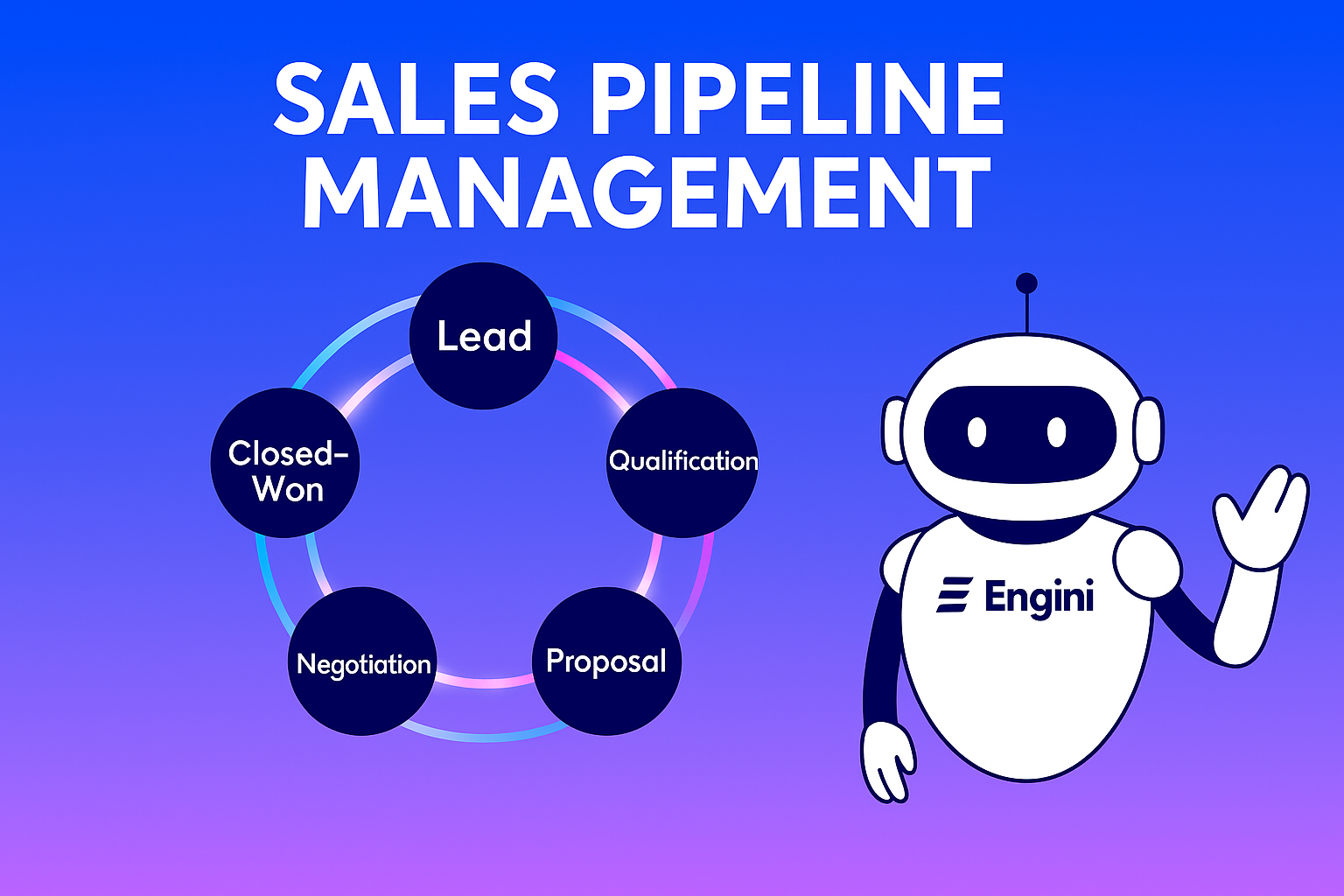
A third scenario involves forecasting. The executive team has endured quarters where the number looked good until late-stage slippage erased half the commit. RevOps responds by requiring exit criteria for each stage, instrumenting next steps, and instituting a forecast review that combines pipeline math with qualitative deal health. Commit volatility falls; confidence rises. The board stops debating format and starts debating strategy.
Communicating Value to Executives
Executives care about predictability, efficiency, and risk. They need to see how revenue operations reshapes those levers, not just how it cleans data. When you present progress, pair numbers with stories. Rather than listing every change shipped, show how speed-to-lead fell, how win rates rose in the ICP, and how renewals surfaced risks earlier. Translate each win into board-level language: greater forecast accuracy, lower cost to grow, and better capital allocation.
That translation earns RevOps the right to lead cross-functional priorities. It also sets the stage for more sophisticated projects, like attribution sanity checks that combine modeled credit with cohort-based ROI, or capacity models that forecast hiring needs based on coverage and productivity curves.
Conclusion
Revenue operations is not a rebrand; it’s the operating system for modern growth. When you unify lifecycle definitions, data, and processes, you create the conditions for durable performance: fewer handoffs, cleaner forecasts, happier customers, and more efficient spend. Start with the map, stabilize the data that matters, and focus on a few high-leverage automations. Keep the cadence tight and the narrative clear. If your pipeline feels noisy or your dashboards don’t tell the same story your reps do, it’s time to make RevOps a first-class function.
FAQs
What are revenue operations?
Revenue operations (RevOps) aligns sales, marketing, customer success, and finance on one lifecycle, shared data, and a common operating cadence to drive predictable growth and better forecasting.
What are the 4 pillars of revenue operations?
People, Process, Data, and Tools defining roles and RACI, standardizing workflows, enforcing data governance, and integrating the tech stack across the customer journey.
How is revenue operations different from sales operations?
Sales operations focuses on the sales function; RevOps spans marketing, sales, customer success, and finance so goals, data, and systems stay aligned across the entire revenue lifecycle.
What are common RevOps KPIs?
Pipeline coverage and velocity, win rate, CAC, CLV, churn, net revenue retention, expansion ARR, renewal rate, and forecast accuracy.
How do you implement revenue operations in 90 days?
Weeks 1–3: definitions and data cleanup; Weeks 4–6: routing and SLA enforcement; Weeks 7–9: deal hygiene and dashboards; Weeks 10–12: renewal health views and a weekly operating cadence.
Like what you see? Share with a friend.
Itay Guttman
Co-founder & CEO at Engini.io
With 11 years in SaaS, I've built MillionVerifier and SAAS First. Passionate about SaaS, data, and AI. Let's connect if you share the same drive for success!
Share with your community


.png)
Comments